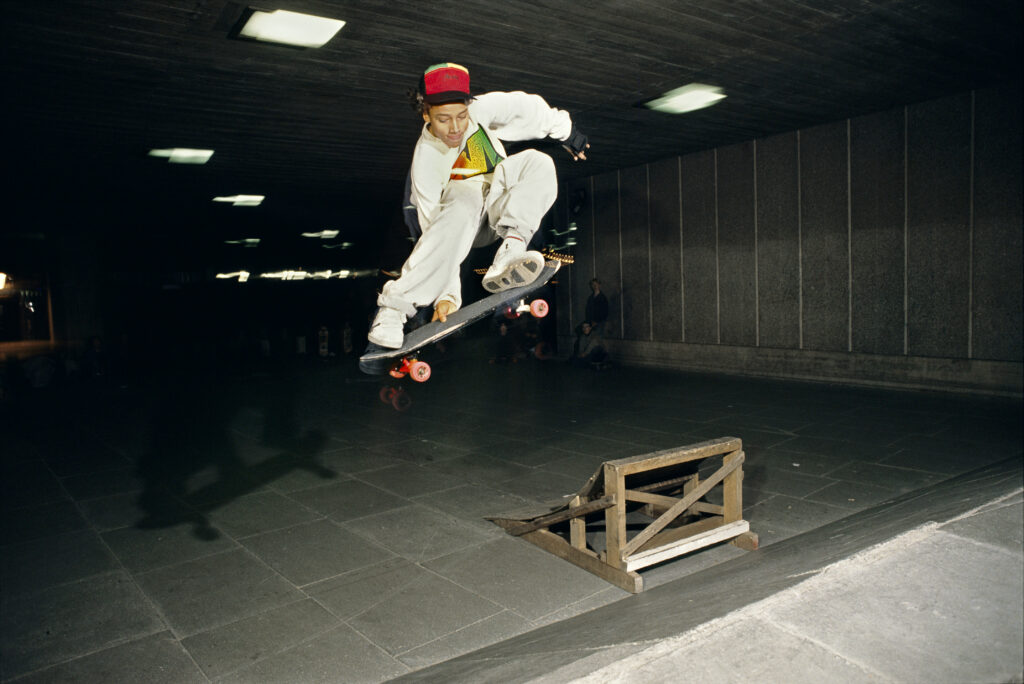

Shredding or Embedding Inequalities: the impact of campaigning for skateparks and other amenities in one of the world’s most unequal countries
We’ve analysed last year’s Communities Survey alongside the findings from our recent Audit of Skateable Spaces, as well as a range of frequently used indicators of the nation’s economy and social conditions. We’ve then used this identify the things that make the biggest difference to skateparks being built…which as you’ll read, includes all of you and your amazing work. You can find out more about this in the following article from our Community Development Lead, Chris Lawton.
You can complete our 2026 Communities Survey here.

Earlier this year, Skateboard GB published initial findings from the UK-wide Audit of Skateable Spaces, undertaken by Goldsmiths, University of London, with skatepark specialists Betongpark. This research highlighted the uneven distribution of skateparks and other skate spaces across the UK’s regions and nations. This is not surprising given the significant inequality that characterises our economy, infrastructure and society. From life expectancy (the life expectancy for a man in the North East is almost 3 years less than in the South East); to income (disposable household income in the North East is £15,384 per head less than in London); to government investment (public expenditure in the East Midlands is £3,059 per head lower than in London). On many measures, the UK is one of the most unequal advanced economies on earth.
In terms of skateable spaces, there is a stark North-South and also West-East divide. The East of England, the South East and the South West had the most skateable spaces, at 292, 267 and 261 respectively (43% of the entire UK stock of sites within just those three regions). Wales, the North East and Northern Ireland had the least, at 119, 54 and12 respectively.
In an attempt to show-off before I leave Skateboard GB in 5 weeks’ time, I quickly penned a LinkedIn article comparing data from the Audit to what we might expect if skateable spaces were distributed equitably according to population. The greatest ‘over-representations’ (where the share of skateable spaces significantly exceeds what we might expect to see on the basis of population) were in the East of England and the South West. The East of England accounted for 9.5% of the UK’s resident population in mid-2024, but 15.4% of skateable spaces according to the Audit. The South West accounted for 8.5% of the national population but 13.8% of skateable spaces. On the other hand, Greater London accounted for 13.1% of the nation’s population but just 7.8% of skateable spaces. The North West, which includes the conurbations of Manchester and Liverpool, accounted for 11.2% of the population but just 6.5% of skateable spaces. Yorkshire and the Humber, which includes Leeds, Bradford, Hull and Sheffield, accounts for 8.2% of the population but 6.5% of skateable spaces.
It’s fairly easy to speculate on the possible reasons for this. With the exception of London (where space is scarce and at a premium, despite the highest level of public spending per head), long-term patterns of affluence, investment and housing development are likely to explain why regions such as the South East and the East of England have the greatest numbers of skateparks. The lower number of skateparks, particularly in the North East, which is Britain’s poorest region in terms of economic output, income and employment, are likely to be a function of relative disadvantage and under-investment.
It is important to make clear that all these sweeping generalisations obscure significant differences within regions. Every region that is ‘poorer’ on average has pockets of relative affluence; and every affluent region has areas of extreme deprivation. But the exceptions struck me as interesting: why does Scotland, a nation with significant areas of deprivation in both urban and rural areas, have a relatively high number of skateparks (199, or 10.5% of the UK total), whilst Wales and Northern Ireland have so few? Why does the East Midlands, a region in which the Council responsible for its largest city, Nottingham, issued a Section 114 in 2023 (the closest a council can come to announcing bankruptcy), and is smaller in population terms than the West Midlands, have more skateparks than its neighbour to the West (161 compared to 137)? Both regional capitals, Birmingham and Nottingham, are relatively disadvantaged, and Birmingham City Council also issued a 114 in 2023, but the East Midlands has for many years languished at the bottom of the rankings in terms of public (Government) expenditure, receiving 10% per head less than the national average, so its higher number of skateparks isn’t easily explained by investment or affluence.
That’s when we thought of you amazing people: skatepark campaigners, skate coaches, indoor skatepark operators and non-profit ‘skate-for-development’ organisations. What other data would be useful to you, to strengthen your funding applications, to add to your presentations to Local Government, and to help design and refine your programming?
Since spring 2024, Skateboard GB has conducted a Community Stakeholder Survey. 36 of you completed it in its first year and then 48 of you completed it last year. We’d very much like for you to complete it again this year, but want to share some insight from it, alongside data from the audit and socio-economic data from the ONS (Office for National Statistics) and other Government bodies who produce high quality statistics and intelligence. In a previous life I worked as an analyst for regional and national Government agencies (on labour markets, education, skills and urban development) and then taught all that stuff to bored 21-year-olds for 9 years. So, I feel there’s something useful I can leave you with in return for 5 minutes of your time on Microsoft Forms.

Defining Local Areas with Data
All data have at least two of the following three characteristics: it was collected at a point in time (a temporal characteristic); it pertains to a physical place (a spatial characteristic); and it applies to or describes a group of people, businesses or phenomena (it has a thematic characteristic). If the person collecting it knows what they’re doing, you’ll be able to compare different datasets across time and place (timeseries and spatial analyses) and you can start to explore how social and economic phenomena might relate to your work. In the UK, we are very lucky to have freely available, high quality socio-economic data. We will soon be hosting a free webinar, just for those of you who are kind enough to complete our survey, that will deep dive into some of this. In the meantime, this article introduces several key indicators and seeks to illustrate what they can tell us about the distribution of skateparks, and, equally importantly, the distribution of you lot…. The people who do amazing stuff in and around skateparks and other skateable spaces.
As a caveat, to ensure this article is short and user friendly, I will only be using the high-level geographic building block of region and nation (the 9 ‘former Government Office regions’ in England plus the 3 Devolved Administrations – Wales, Scotland and Northern Ireland). Our webinar will show you how to dig down deeper into Counties, Unitaries and Metropolitan Boroughs, Districts, Wards and Super Output Areas. These high-level geographies are also the disaggregation at which the widest range of data is available. These are the indicators we’re going to look at:
- Gross Value Added (GVA), the sub-national equivalent of the notorious GDP, the most widely used measure of the size of an economy. It captures the value of production created in workplaces within a given area.
- Gross Disposable Household Income (GDHI) places a lens on households and their economic circumstances. Where GVA captures the wealth coming out of an area, GDHI estimates the amount of income associated with households. It is an estimate of the average income, per head of population, left to spend or save after major costs (e.g. rent, tax and mortgages) have been subtracted.
- Unemployment is far more specific than you might think. This measure, set globally by the International Labour Organisation (ILO), captures the number and proportion of working age people (aged 16+) who are not currently in paid employment but are available for work and actively looking for it. If you are not actively seeking work, you are not unemployed, you are ‘economically inactive’, a category which includes full-time students, early retirees, those with long-term illnesses that prevent any form of paid work, and so-called ‘discouraged workers’ (usually those who’ve been looking for so long that they’ve given up).
- Life Expectancy at Birth, which is exactly what it says on the tin. This is a key public health outcome indicator. Where conditions in a region are not conducive to healthy living, including the quality of healthcare services and amenities for physical activity, housing quality, and socio-economic determinants (including employment and income), people tend to live shorter lives on average; and
- Public Expenditure per Head of Population, which measures Government spending (on services, on infrastructure such as transport, on Local Government administration, etc.). This is published annually by the House of Commons Library and helps us understand the extent to which public spending is targeted according to need, or not, and whether this corresponds with the amount of community infrastructure, including skateparks, that are being built.
We could include a measure of physical activity (for example, from Sport England’s Active Lives Survey), but unfortunately this isn’t available for the 3 Devolved Administrations, so these 5 indicators – economy, income, (un)employment, health and investment – will help us explore ‘why’ some regions or nations may have a lot more skateparks than we might expect, and why some have much fewer. We’ll then compare this to the insight from our Stakeholder Survey, to help us explore whether you – and the work you do – drives some of these unexpected relationships.
For example, does the South West have more skateparks just because that region includes some relatively affluent areas, including those in commuting distance from and to London, plus attractive holiday destinations, plus a long tradition of surfing? Or is it also because there are more high quality skater-led community organisations, including and especially within the parts of the South West that are more disadvantaged?

Findings: What affects the distribution of UK Skateable Spaces?
I compared the variation by region and nation in the above indicators to the distribution of skateable spaces from the Audit, and also the distribution of skater-led organisations from our 2025 Community Stakeholder Survey (48 responses, 47 of which were from the nine English regions or 3 Devolved Administrations, one was from the Channel Islands). I ranked each indicator and compared the ranks (so we have a consistent and comparable value across all our indicators). I then ran a simple correlation test (Pearson’s r), which tells us how strong the association is between two numeric values in terms of direction of travel. If the value is close to 0, it’s a weak relationship. If its close to 1.0 (the maximum possible), it’s a strong positive association; it its close to -1.0 (the minimum possible), it’s a strong negative association (i.e. the two indicators are travelling in oppositive directions, but in a similar pattern). It doesn’t tell us anything about causal relationship – whether one indicator actually affects the other – but it helps us identify the likely most relevant factors to investigate through future research.
Firstly, in terms of the production of wealth (GVA), the regional distribution is a classic illustration of the UK’s economic geography. London had the highest GVA in 2023, at £64,519 per head, way ahead of the next highest, the South East, at £37,385 per head. Together these regions form ‘the Greater South East’, the capital and its commuter belt as the engine of the British economy. Then the strong northern economies follow, with the North West, due primarily to Manchester, at £32,024, and Scotland, at £33,419 per head. Conversely, the North East had the smallest economy in 2023, with a GVA of just £25,408 per head. This was only slightly smaller than Wales, where the GVA per head is £25,742. Because GVA is measured on the basis of where people work (not where they live), it places an outsized role on powerhouses like London, Manchester and Edinburgh which, for residents and local communities, do not necessarily provide a comparable level of income. Unsurprisingly, the relationship between GVA and the distribution of skateable spaces is not therefore the strongest, with a correlation coefficient of 0.57. This is particularly due to the differing distribution at the top: the East of England, which has the most skateable spaces, has only the 6th biggest economy in terms of GVA per head. But it is much closer at the bottom: the North East and Wales also have amongst the fewest skateable spaces in the UK. A region’s productive capacity is therefore an important ‘vibe’ that affects things like skate infrastructure – but is not the driving factor.
However, our analysis clearly suggests that income may be the driving factor. Income is distributed differently than wealth generation – because it is a household measure, based on where people live and relating to the part of the economy known as the ‘household sector’ (the people who get paid wages in return for contributing to wealth production; and then spend a proportion of those wages on goods and services). Income is arguably a much better indicator than GVA of ordinary people’s experiences of the economy. London also has the highest disposable household income, at £35,361 per head in 2023, but the capital is then followed by the South East, East of England and South West (the three regions with the greatest number of skateable spaces). The North East, again, is ranked lowest, with a household income of just £19,977 per head, whilst Wales is ranked 11th and Northern Ireland is ranked 10th. These are the three regions and nations with the least skateable spaces. The Pearson’s r value thus indicates a very strong association between income and skateable spaces, at 0.86.
We know from the theory and literature that income is a key determinant of many other things: it’s a big factor influencing the health of an area, and it also affects educational attainment, housing quality and access to services (which all also influence health). But some key indicators have a more complex relationship to income, and therefore also to skateable spaces. Unemployment is one of those indicators.
Unemployment isn’t always higher in lower income areas: sometimes an area can have high levels of employment, but low income. For example, Lincolnshire, where I grew up, is characterised by high employment but poor job quality: there are sufficient jobs for local people, but they are disproportionately low paid and lower skilled. Other areas can have high income but also high unemployment. London is a stark example, due principally to the concentrations of inner-city disadvantage and poverty relatively short distances away from global centres of wealth creation. The association between unemployment and skateable spaces is therefore the weakest of all our indicators, with a coefficient of just 0.08. Based on this simple analysis it is not possible to say that lots of skateable spaces is linked to lower unemployment, or that higher unemployment provides a strong driver for investment in skateable spaces. The lowest unemployment rate in the three months to March 2026 was in Northern Ireland, at just 2.1% of the economically active population, whilst the highest was in London, at 7.3%.
Life expectancy is one of the most shocking and visceral illustrations of how regional inequality plays out in the UK. On the face of it, our analysis shows a very similar pattern to skateable spaces. The regions with the longest life expectancies are the South East, South West and East of England for men, in that order; and South West, South East and East of England for women. In the South East men are estimated to have a life expectancy at birth of 80.1 years and women 83.8 years.
Yorkshire and the Humber, the North West and North East have the lowest male life expectancies; whilst Wales, the North West and the North East have the lowest female life expectancies. Men have an average life expectancy of 77.2 years and women 81.2 years in the North East. Unfortunately, comparable estimates are not available for Scotland (the only indicator in our analysis where data is not available for all 12 regions and nations). This of course has a strong correlation with the pattern of skateable spaces, but it would be a leap to infer a causal relationship between the two – given we know income is such a significant factor in both. Although the presence of skateable spaces is of course likely to support improved health (and their absence presents yet another barrier in areas of already poor health), it would be misleading to place too much emphasis on an association between the two – given the likely much stronger role of income inequalities.
When I started this analysis, I expected government investment to have a strong positive relationship with skateable spaces. This was based on the logic that infrastructure spending, greater funding for Local Government (key funders and also the landowners of most outdoor public skateparks), and a higher quantity of central government grants and other discretionary funding would naturally make it easier for skateparks to be built. However, as hinted in the introduction to this paper, I was already aware of exceptions to this – particularly my home region of the East Midlands, which has the 2nd lowest level of public spending per head but a relatively high rate of new skatepark construction. The data suggests a contradictory or counter-intuitive relationship across most regions and nations. The regions with the highest levels of public expenditure are London (which received £15,217 per head in 2024-25) but also the three Home Nations of Northern Ireland (£16,116), Scotland (£15,563) and Wales (£15,155). Only Scotland has significant amounts of skateable spaces, with Northern Ireland the lowest (ranked 12th) and Wales ranked 10th. The region with the highest number of skateable spaces, the East of England, received a relatively low level of public expenditure, at £12,296 (ranked 10th). The correlation coefficient in fact indicates a negative association, at -0.62, but there are few credible explanations for this to be causal. Instead, other factors are simply likely to be much more relevant.
Based on the findings of the Audit itself, a more relevant factor is likely to be the presence and extent of local skateboarding organisations and skatepark campaigns. Alongside whether or not a skatepark was built in concrete (with a bespoke design, constructed in situ), the presence of a local user organisation was the most important predictor of skatepark quality for the 1,923 sites analysed by the Audit’s authors at Goldsmiths, University of London, and Betongpark. Looking at our data, it would be reasonable to also conclude that the presence of such organisations is at least associated with whether or not a skatepark gets built in the first place. The distribution of skate organisations by region and nation according to our 2025 survey had the second strongest positive association (after income) of the indicators we analysed (excluding life expectancy for the reasons discussed above), at a correlation coefficient of 0.76. Two of the three regions with the highest number of skateparks (the South West and the South East) also had the highest number of skate organisations (13 in the South West and 8 in the South East), whilst the regions and nations with the lowest number of skate organisations (we had 0 respondents to our 2025 survey from either Northern Ireland or Yorkshire and the Humber, for example, and just 1 from the North East and 2 from Wales) were also under-represented in terms of skateable spaces.

Conclusions
So, alongside income, we can provisionally conclude that your work is at least associated (to use the appropriately caveated and cautious term) with more skateable spaces.
What it doesn’t tell us is anything about the quality of that activism – which is something we can explore and celebrate in future editions of Shout Outs. For example, we know that Skateboard Scotland are one of, if not the, longest running community skateboarding organisation in the UK. We also know that Scotland is relatively over-represented in terms of skateparks, and was the first nation in the UK to experience a significant quantity of modern concrete skateparks – at least 5-years ahead of England. Are these things connected? We also know that Shred the North, 12 years deep in the game, are one of the best skateboarding non-profits in the UK – and amongst the most productive: having recently completed consultation reports on multiple alternative sites for 5-Bridges and an excellent collaborative toolkit on skatepark design and development standards with Northumberland County Council. The North East may have a relatively small number of skateparks, but what would that look like in the absence of Shred the North – given the significant structural challenges the region has faced for decades?
And finally, we know things are challenging in London, despite the advantages the capital enjoys in terms of higher public expenditure and the proximity to so much wealth. With so many skate organisations being established in that region, what are the opportunities for collaboration, and how can we better express both the challenges and the potential opportunities to key partners like London Sport, especially if this is done collectively?
Hopefully this analysis gives you all some ammunition to help in those many battles.